How to Keep Poultry Records Effectively
How to keep poultry records effectively means you write the same facts, on the day they happen, and in the same order. A skipped day or a changed column stops you comparing this week with last week. Use the fields, the daily time, the split by cage or shed, and the weekly check below. If you first want the reasons records matter, read The Importance of Record Keeping in Poultry Farming.
Set a practical poultry record routine
Pick one visit you already make. The evening feed is a good time. Write the record before you leave the birds. If you wait until the next morning, you can forget a death, eggs taken home, or a bag you opened.
Keep the entry short. It should take less time than washing the drinkers. If it takes longer, remove a field. A short entry you finish is more useful than a long form you skip.
A practical poultry record routine fails if you write only on bad days. Write on ordinary days too. Those days show the usual egg count, usual feed use, and usual deaths. You can judge a poor day only when those usual numbers sit beside it.
Write the entry before you leave
Do not keep the facts in your head until later. You will forget single items. When no bird died, write 0. A blank line can mean you forgot, not that the count was zero.
If you miss a day, leave that date blank and write “missed” in the note. Do not fill in an egg count from memory. A guessed number will make the week higher or lower than the real count. Continue the next day as normal.
Use the same fields in the same order
Effective poultry record keeping uses one field list for the whole month. Do not add a new column because one day was unusual. Put an unusual fact in a short note at the end of that day’s line.
Use this order. It is a working checklist for a small farm. It is not a laboratory form. Write money with the currency, and use the amount you actually paid or received.
| Field | When to write it | What you compare |
|---|---|---|
| Date | Every entry | Which day the numbers belong to |
| Eggs collected | Every day | This week against last week |
| Eggs kept at home | Every day | Production that was not sold |
| Feed used | Each day, or each bag you open | Feed against eggs and birds sold |
| Deaths and culls | Every day, including 0 | Whether losses repeat |
| Vaccination or treatment, when given | On the day you give it | Whether eggs or deaths changed after it |
| Birds still in the pen | Once a week | Birds missing that you did not see die |
| Cash in and cash out | Once a week | Whether the flock covered its costs |
Add a new field only at the start of a week
If you need a new field, start it on the next Monday. Keep every old field. Then the earlier days still line up with the later days.
Effective poultry record keeping also includes one weekly review before any change. The daily line gives you the numbers. The weekly review tells you whether to act.
Split accurate poultry farm records by cage or shed
One total for the whole farm will not show a weak cage. A strong cage can raise the total. Give each cage, shed, or flock its own page, or its own line with the cage name on it.
Use the same field order on every page. You can then add eggs or deaths across cages without moving columns. If you have only one pen, still write the pen name. You will not have to rebuild the page when you add a second pen.
Keep the same group name
Accurate poultry farm records use the same cage name all month. Write “Shed 1” or “Cage A” and do not rename it. A new name will not match the earlier lines for that cage.
Record eggs, feed, and birds so the numbers agree
Count eggs at the same hour each day. Write three numbers: eggs collected, eggs sold, and eggs kept at home. You can note cracked eggs at the end of the line. Eggs kept at home are still production. If you leave them out, the daily total is lower than the number the birds produced.
Write feed when you open a bag. At the end of the week, write what is left. Feed is usually the largest cash cost. Compare feed used with eggs collected and with birds sold. Check this for several weeks. If feed cost stays above the value of eggs and birds, change the ration or the flock size. Use your own amounts. Do not copy a price from another farm.
When birds leave, write the date, the number, and the reason: sold, eaten, given away, died, or culled. Count the birds still in the pen once a week. That count shows birds you did not see die.
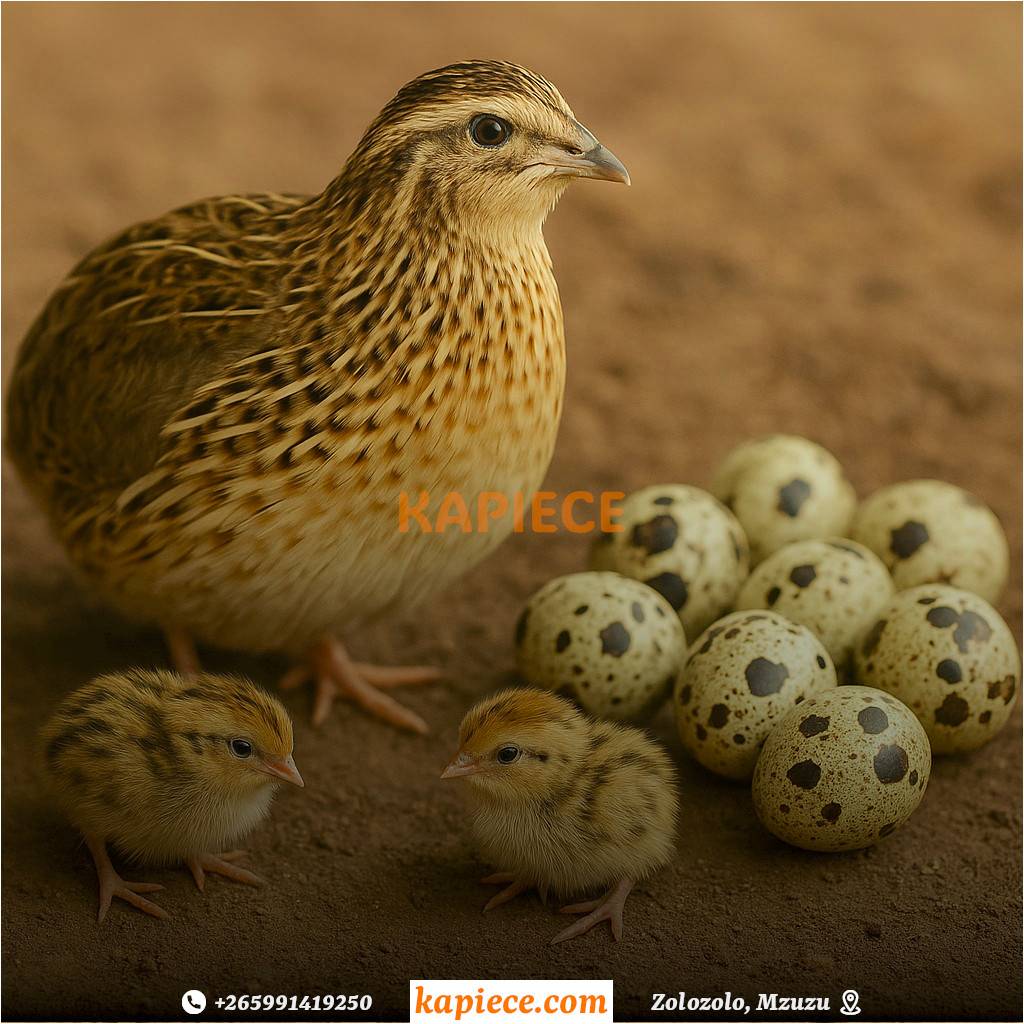
Quails often start laying at about six to eight weeks. Your dated egg line shows whether this flock started then. Do not use the age rule by itself.
Read the week before you change feed, birds, or treatment
Once a week, before you change anything, read the last seven days. Compare eggs, feed used, deaths, and cash in against cash out.
Change one thing only. Write the date and the change, such as new feed or added birds. At the next weekly check, see whether eggs, deaths, or feed use moved. If they did not move, undo that change or try a different one.
Do not change feed and treatment in the same week, unless the birds need urgent treatment. Give that treatment the same day, and leave the feed as it is. You will not know which change caused the result if you change both. Also do not add birds in the same week you change feed. Keep those tests on separate weeks.
Keep one poultry farm record system
Use one place for each flock. Two half-finished records are harder to trust than one complete record. A poultry farm record system can be a notebook or Kapiece Hub, but not both for the same days.
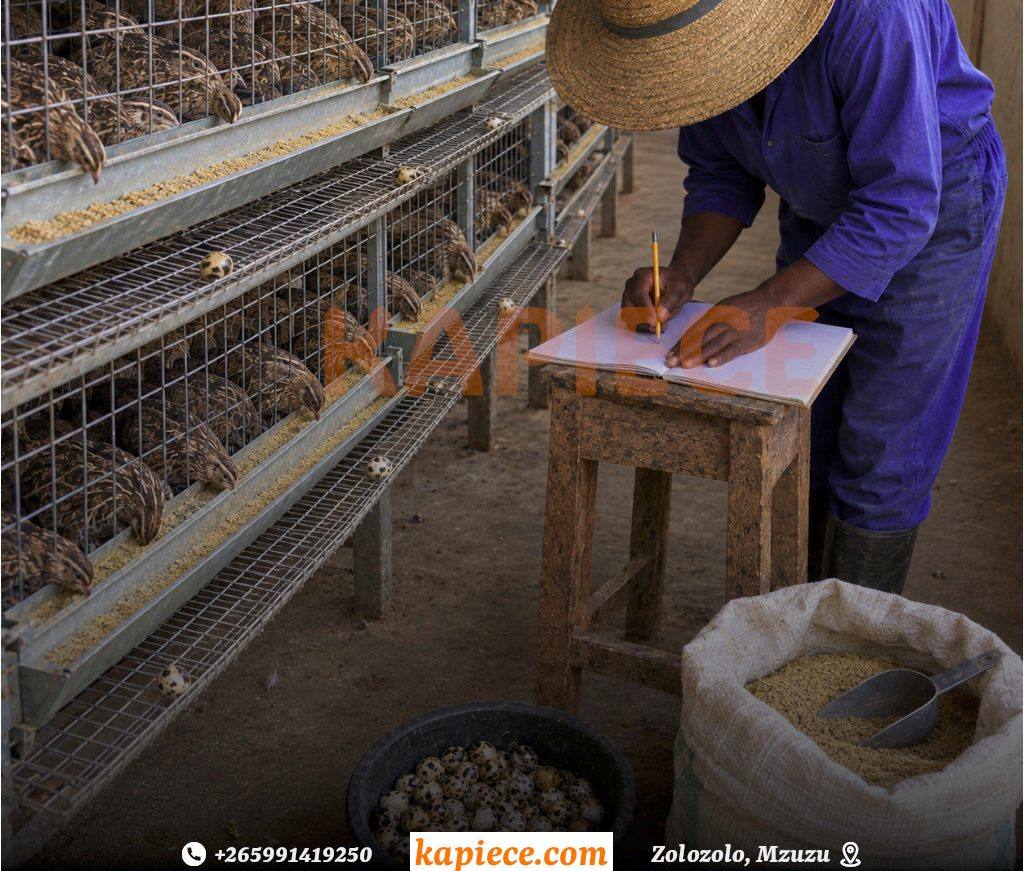
A notebook works on a small farm. Use one book for one flock. Keep the book at the pen. Follow the field order in the table above.
You can use Kapiece Hub instead of the notebook. Hub stores a daily log, egg production, feed, treatments, bird batches, and breeding records. You can enter them for the whole farm or for one cage or shed. The mobile and desktop apps save entries without a signal and sync when the phone or computer is online again. To see what Hub includes, read the Kapiece Hub page.
Start keeping poultry records properly tonight
Keeping poultry records properly starts with seven complete days, not with extra columns. Write five fields tonight: date, eggs collected, eggs kept at home, feed used, and deaths. If no bird died, write 0. Repeat that line for seven days.
After seven complete days, add the weekly cash line and the weekly bird count. Then keep that order. That is how to keep poultry records effectively on a small farm in Malawi. Use the same fields, on the same day, in one place. Run a weekly check before you change the flock.